top of page

(061) 439 949 | bmpartsandtools@gmail.com | Unit 3 Crossagalla Industrial Estate, Ballysimon, Limerick, V94E6C0

bg2.jpg

BM Parts & Tools

For affordable high-quality security locks, spare parts and tools contact BM Parts & Tools

ERA Fortress British Standard 3621:2007 Mortice Deadlock

€29.95
Price incl. VAT (23%) €5.60
Colour
In stock
Product Details
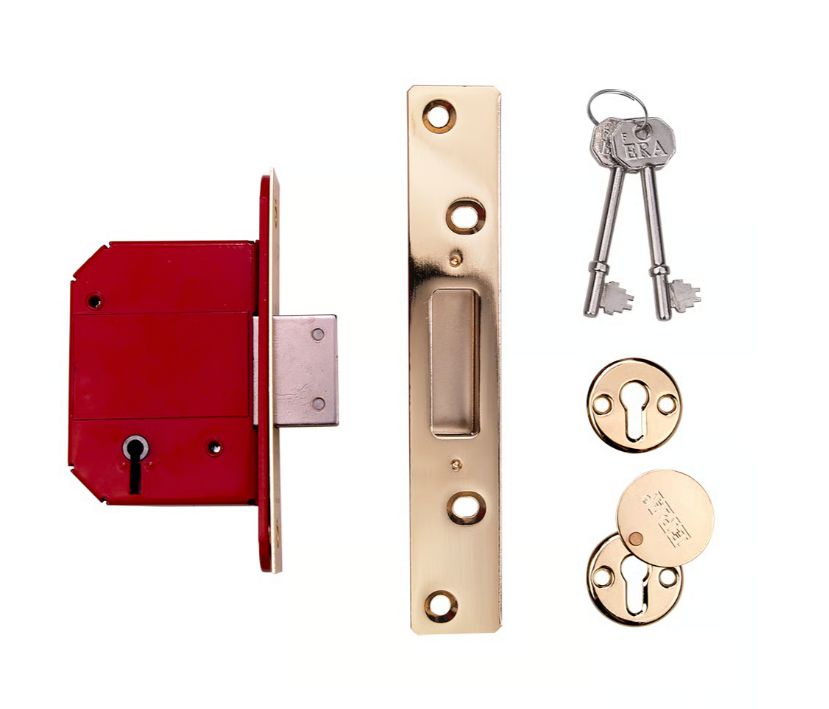
The ERA Fortress mortice dead lock is the most popular mortice lock in the UK. They feature the distinctive laminated deadbolt and comply with BS3621, and they are CE, UKCA and Certifire tested.


The ERA Fortress mortice lock is designed with hardened steel plates to resist drilling and two hardened steel plates in the deadbolt to resist hacksawing. The keys have 1000 variations for added security and the all steel levers have false notching to resist lock picking


These locks meet the requirements of British Standard BS3621:2007. To meet this standard, products undergo rigorous testing. Featuring 5 levers, anti drill and anti saw features, these are a high quality and high security mortice lock.


In line with a number of other mortice locks, these locks feature a red lock case but they have unique measurements that identify them from other mortice locks. Please refer to the line drawing for details.


This mortice lock BS3621 is available in polished brass, satin chrome or polished chrome colours.


To meet the requirements of British Standard BS3621, the deadbolt throws at least 20mm from the body of the lock to ensure positive deadlocking and additional resistance against attack.


The deadbolt on the current range of Fortress locks is made of a series of laminated steel plates. Earlier versions had anti saw pins in a solid deadbolt.


The deadbolt can be locked and unlocked from either side by use of the key.


This lock is supplied with 2 key hole escutcheons, in a matching finish to the lock for both the internal and external sides of the door. It also comes with a security striking box (to meet the requirements of BS3621) in a finish to match the faceplate.


Suitable for use on doors up to 54mm thick. The thickness of the door is determined by the length of the keys. If you require this lock to be fitted to a very thick door, we may be able to supply extra long keys. Please contact us for more details.


These locks are not handed and can be used on doors hinged on the left or right, which open inwards or outwards.


Supplied with 2 keys as standard. We can cut additional keys for this lock, just select whether you'd prefer genuine or copy key blanks and the quantity required from the associated products on this page.


Should you require more than one lock to work on the same set of keys, these locks can be keyed alike by our inhouse locksmith team. We can typically dispatch the same day (larger quantities may require longer).


Many insurance companies insist that locks fitted to external doors comply with BS3621 or BS8621. Your client should always check with their insurance company to be sure. These locks meet the requirements of BS3621 and you can find the BSI kitemark on the faceplate.


In order to comply with the British Standard, these locks must feature: - 5 levers with at least 1000 key differs - Anti pick features to prevent the lock from being picked - Hardened plates that protect the sides of the lock from being drilled - a minimum 20mm bolt throw into the keep or strike


You can find a very useful guide to British Standards for mortice locks on the MLA's website here: https://www.locksmiths.co.uk/faq/what-are-bs3621-british-standard-locks/


We stock a range of associated parts to these locks, including key blanks, rebate sets for use on double doors and levers. Please select the products you require from the associated products on this page.


These locks are CE and UKCA marked and tested to EN 1634-1 for use on 60 minute fire doors.


Please always check the relevant fire assessment, door specification or with the relevant authorities that this product is suitable for use in the specific environment that it is fitted in. You can find more details about the product on the DOP.


This lock has been independently tested by Certifire for its suitability for use on fire doors.


These locks do not feature an escape function and can be locked from the outside which may make them unsuitable for use in certain environments.


At the cornerstone of the UK’s hardware sector, ERA continues to drive the innovation that underpins home security. With over 175 years of manufacturing, design and innovation, we have been firmly at the heart of securing Britain’s homes since 1838.


ERA believe that creating a secure home is not about a single component it encompasses a range of products that work together to secure a property. ERA’s range covers everything from locks, hinges, and additional security to alarms and intercoms; ensuring that all homes can have the very best hardware working together to give ultimate peace of mind.


Mortice lever locks (sometimes called mortise locks) are commonly fitted to wooden doors but can also be found used in steel, aluminium, and composite doors. They are locked from both the inside and outside with the key which throws the deadbolt. By definition, a mortice lock is fitted (“morticed”) within the door, rather than being fitted to the face or surface of it.


There are multiple types of lever lock in use in the UK. Dead locks (mortice dead locks) are operated by a key only whereas sash locks (mortice sash locks) feature a dead bolt and a latch which is operated by a handle (often a lever handle). Both lever locks with throw the dead bolt into a strike plate. The strike plate on sash locks also accepts the sprung loaded reversible latch.


Lever mortice deadlocks can be used for fitting to front or back doors and to internal doors and external doors, but we’d always recommend fitting a British Standard BS3621 product to external doors for maximum security. You should also check with the houseowner’s insurer’s requirements on both residential properties and commercial properties. You may find lever locks fitted to commercial properties but cylinder lock cases operated by a cylinder or pin tumbler lock are more common mortice locks fitted in commercial environments.


Lever mortice door locks are commonly used for internal doors too. These tend to be 3 lever mortice locks where the requirements for security and burglary prevention are lower.


When replacing an existing lever mortice lock, you may find that your replacement mortice lock is larger than the one that you are replacing. This may be because you are improving security, such as upgrading to a lock with thicker, anti-drill hard steel plates or because the forend length, forend width or the design of the lock has changed. The hole for the lock can normally be made larger with a hammer and chisel. This can also be the case for strikes, which may have changed design.

Save this product for later
Share this product with your friends
ERA Fortress British Standard 3621:2007 Mortice Deadlock
bottom of page